
The Candy Cane
The History Of The Candy Cane
In 1670, the choirmaster for the Cologne Cathedral, Germany, gave white sugar sticks bent as shepherd’s crooks to the young singers to keep them quiet during the service.
Then in 1847, August Imgard, a German- Swedish immigrant introduced the Candy Cane to the U.S. in Wooster, Ohio. According to the National Confectioners Association he decorated a blue spruce tree with white Candy Canes and paper ornaments in the window of his home.
The iconic red and white Candy Cane gained popularity in the 1950’s when the process of making them became automated verse the laborious method that candymakers had done for generations.
Did you know?
August Imgard’s house still stands today in Wooster, Ohio. The owners of that home continues the tradition by placing a tree in the same window August did so many years ago. Of course, adorned with white Candy Canes.
Sweet
〰️
Tradition
〰️
Wooster, Ohio
〰️
Sweet 〰️ Tradition 〰️ Wooster, Ohio 〰️
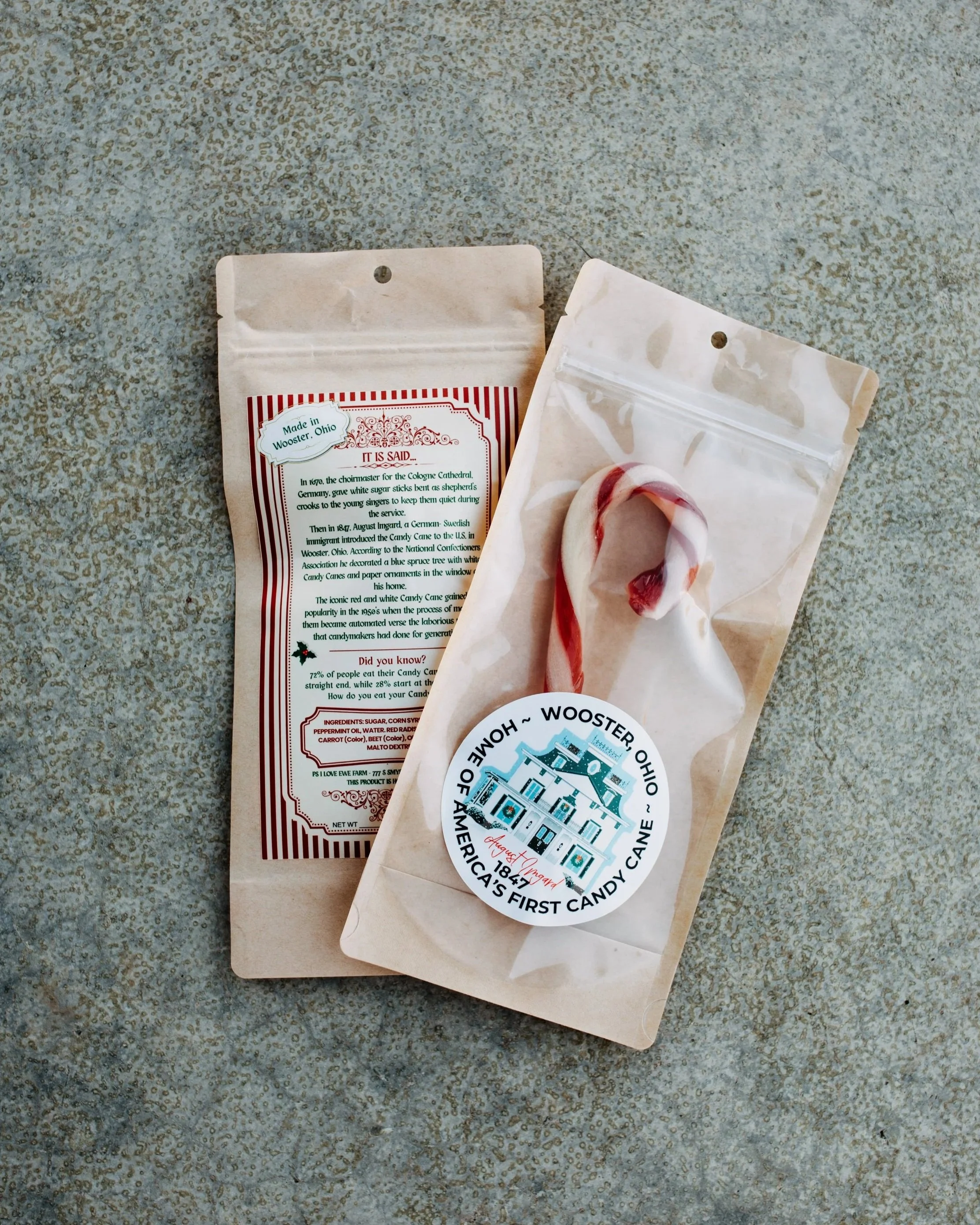
Wooster! Home of the United States’ First Candy Cane. August Imgard- 1847
This mini 8inch Candy Cane is home-produced in the city that introduced the Candy Cane to the USA. Taste the tradition of small town, Ohio that expanded the USA.
Includes: 1 Candy Cane
INGREDIENTS: CORN SYRUP, SUGAR, NATURAL PEPPERMINT OIL, WATER, COLOR: RED RADISH, PURPLE CARROT, BEET, ORGANIC TAPIOCA, MALTO DEXTRIN
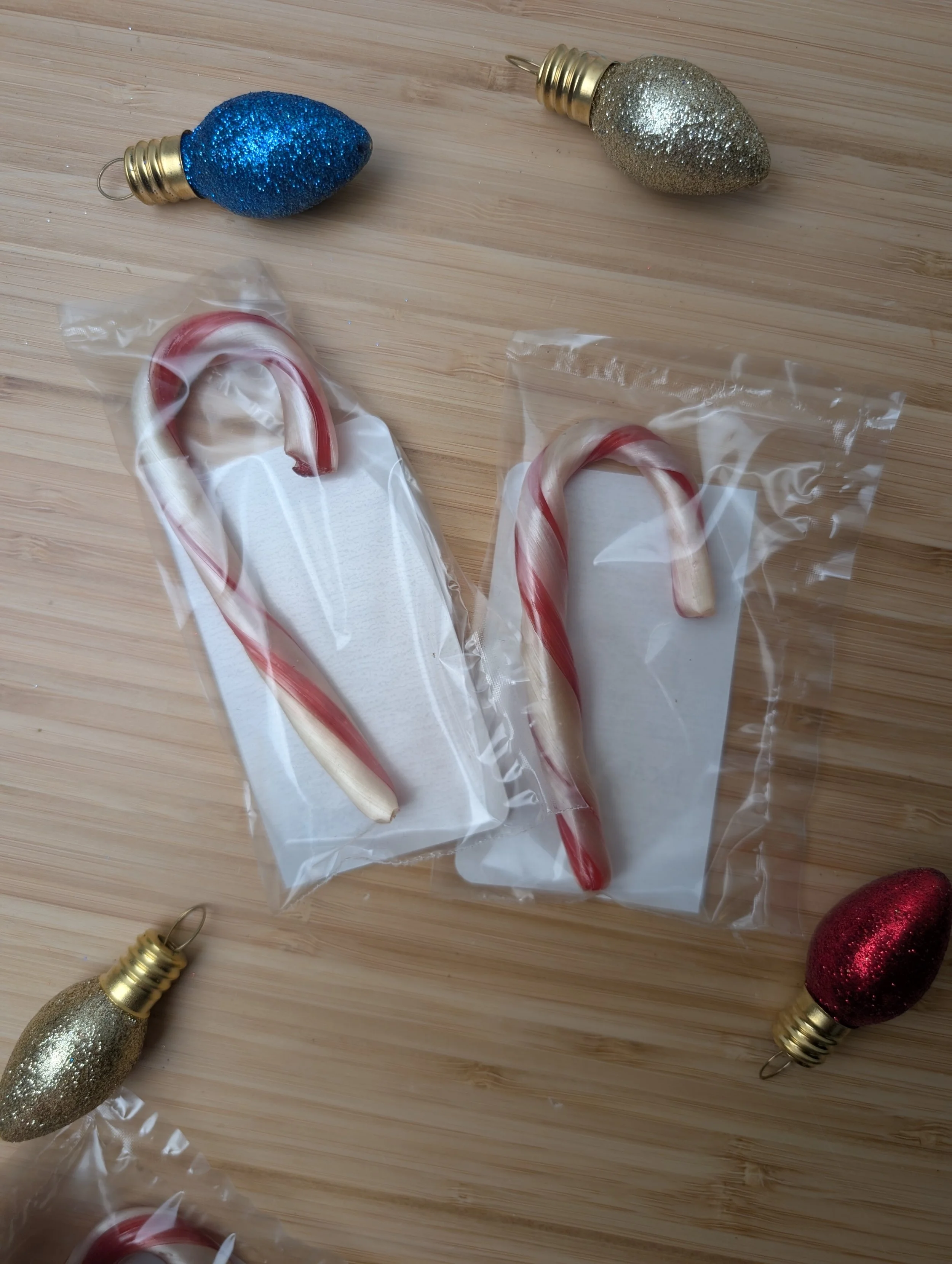
Wooster! Home of the United States’ First Candy Cane. August Imgard- 1847
This mini 3inch Candy Cane is home-produced in the city that introduced the Candy Cane to the USA. Taste the tradition of small town, Ohio that expanded the USA.
Includes: 1 Candy Cane
INGREDIENTS: CORN SYRUP, SUGAR, NATURAL PEPPERMINT OIL, WATER, COLOR: RED RADISH, PURPLE CARROT, BEET, ORGANIC TAPIOCA, MALTO DEXTRIN
Shop Our Products in Person at Local Roots
140 S Walnut St, Wooster, OH 44691